The Automated Future: The Myth We Keep Buying
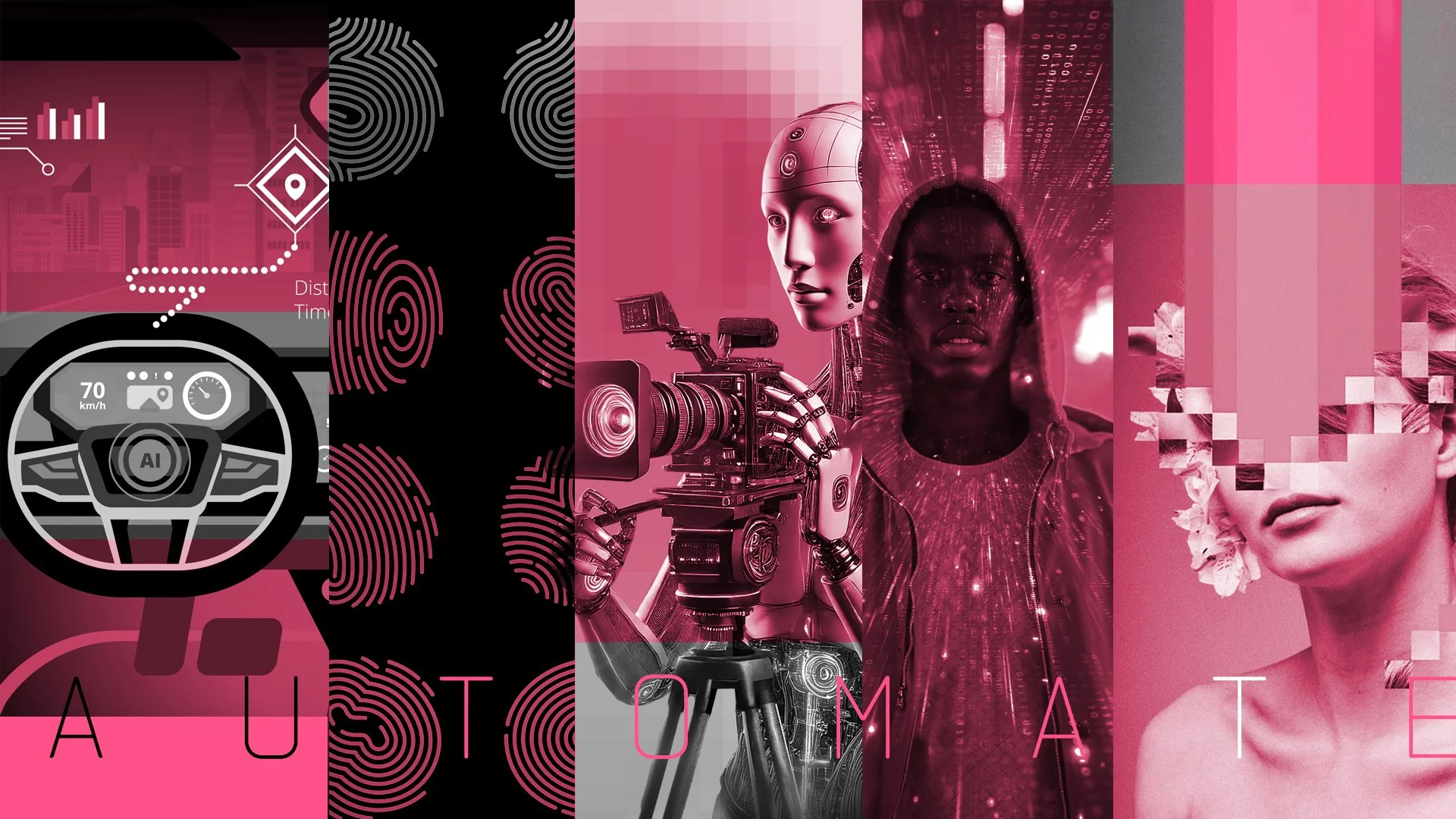
Montage: Curt Doty
Let’s get one thing straight: AI hasn’t automated your job—it’s just made your boss lazier.
For the last three years, the hype around AI has been centered on “automation.” Press releases, investor decks, and conference keynotes all chanting the same utopian mantra: “Automate everything.” Reality check: AI didn’t build a smart home, a self-driving car, or a fully automated Hollywood. It enhanced, augmented, and occasionally optimized—but let’s drop the fantasy that it replaced anything wholesale. Especially humans.
Take the “AI Films” revolution. Heard of it? Probably not, because in the last three years, only five theatrically released films can be truly called “AI-generated”. Five. You’re more likely to catch Bigfoot in IMAX. The Brutalist used AI to fix accents and generate some architectural visuals for a mock presentation—not to replace editors, actors, or directors. That’s not automation, that’s augmentation. Helpful? Sure. But it didn’t fire the gaffer or direct the actors. AI‑generated cinema is still fringe, not mainstream automation.
And AI art? Just because Midjourney can spit out a faux-Ghibli mashup doesn’t make you Hayao Miyazaki. In fact, he called AI-generated visuals “an insult to life itself”. Real artistry isn’t about style mimicry—it’s about soul. And folding laundry.
Because let’s talk about real automation. The washing machine is one of the great mechanical marvels of the 20th century. It took away hours of toil. But even that—that—didn’t sort your colors, hang your delicates, or return your socks to the drawer. Human in, human out. Sound familiar?
That’s why I don’t call this an “automated” era. I call it an enhanced one. A world where AI assists, nudges, and optimizes—but doesn’t lead. Not yet.
Andy Beach, former CTO of Microsoft’s Media & Entertainment division, nails it: “Much of what is marketed as AI today is automation combined with statistical modeling and feedback loops. That does not make it trivial. It makes it understandable.
Automation is consequential. It scales decisions. It reshapes labor. It determines who gets visibility and who gets filtered out. But those effects come from execution at scale, not cognition. Calling automation what it is sharpens critique rather than dulling it.
Inflated language creates inflated fears and misplaced defenses. Accurate language brings the conversation back to incentives and outcomes.”
The myth of autonomous AI is just a convenient scapegoat for bad decision-making.
So when companies cut headcount citing “AI automation,” let’s be real: that’s not transformation. That’s cowardice. The federal government alone shed a million jobs under Waste, Fraud and Abuse—while simultaneously there is merging evidence that global business failed to upskill or adapt their workers with AI literacy. This isn’t innovation. It’s abdication and needs legislative focus
As Beach urges, “Normalize the functional layers.” Don’t call it “AI.” Call it what it actually is: automation, classification, prediction, optimization, orchestration, enforcement. Be precise. Because that clarity is power. And lazy language only lets bad actors off the hook.
Which brings me to our modern smart homes. Smart Refrigerators tell you you’re out of eggs and agentic AI will order them without telling you. Convenience, sure. But also, creepy. That’s not “smart”—it’s unsupervised. It’s not the helpful housebot of sci-fi. It’s a permissionless credit card thief with a Wi-Fi connection.
The truth is, automation is not inherently bad. But the blind worship of it is. If we frame AI as magical, we forget there are people behind the prompts, behind the policies, behind the programming. And they—we—need to stay accountable.
So here’s my rallying cry: stop being lazy with the language. Stop surrendering the narrative to the myth that “AI will do it for us.” It won’t. It still needs you—the artist, the operator, the optimizer, the orchestrator. Keep the human at the center of the machine. And while you’re at it, fold your damn laundry.
Sources:
https://substack.com/home/post/p-184918647
https://www.bloodinthemachine.com/p/artists-are-losing-work-wages-and
https://ari.us/new-ai-bill-gathers-data-on-ais-jobs-impact/?utm_source=chatgpt.com
https://www.sciencedirect.com/science/article/pii/S0308596125001181?utm_source=chatgpt.com
https://www.ft.com/content/7e2ae3ad-4cfb-4e3f-a370-702781899e05?utm_source=chatgpt.com
https://www.realmiq.com/blog/these-digital-humans-are-stealing-the-spotlight-and-your-clicks
https://www.realmiq.com/blog/why-is-hollywood-in-panic-mode
https://www.realmiq.com/blog/building-a-human-centered-ai-operation-with-ethics-at-the-core-1
https://www.realmiq.com/blog/an-insult-to-life-itself
About the Author
Curt Doty is a former studio executive and award-winning creative director with deep leadership experience across the entertainment and branding industries. Ten years in Television. Ten Years in Movies.
As the founder of CurtDoty.co, a creative consultancy, Curt has led integrated marketing, multi-channel storytelling, branding, identity, and user experience initiatives for a diverse roster of clients.
Over the past 15 years, Curt has leaned into innovation—leading R&D projects at Apple, Toshiba, and Microsoft, and pioneering interactive content.
Today, Curt’s work also explores the intersection of AI and entertainment. A sought-after fractional leader (CCO, CMO), speaker, and AI educator, he focuses on demystifying AI for creatives and executives alike.
Curt is a sought after public speaker having been featured at Mobile Growth Association, Mobile World Congress, App Growth Summit, Promax, CES, CTIA, NAB, NATPE, MMA Global, New Mexico Angels, PRSA, EntrepeneursRx, Digital Hollywood, SHRM, Streaming Media NYC, and Davos Worldwide. Download his speaker presskit here.
He also hosts RealmIQ: Sessions, a podcast spotlighting thought leaders in tech, content, and design—continuing his role as a visionary voice in the future of creativity.