In the Blink of an EYE
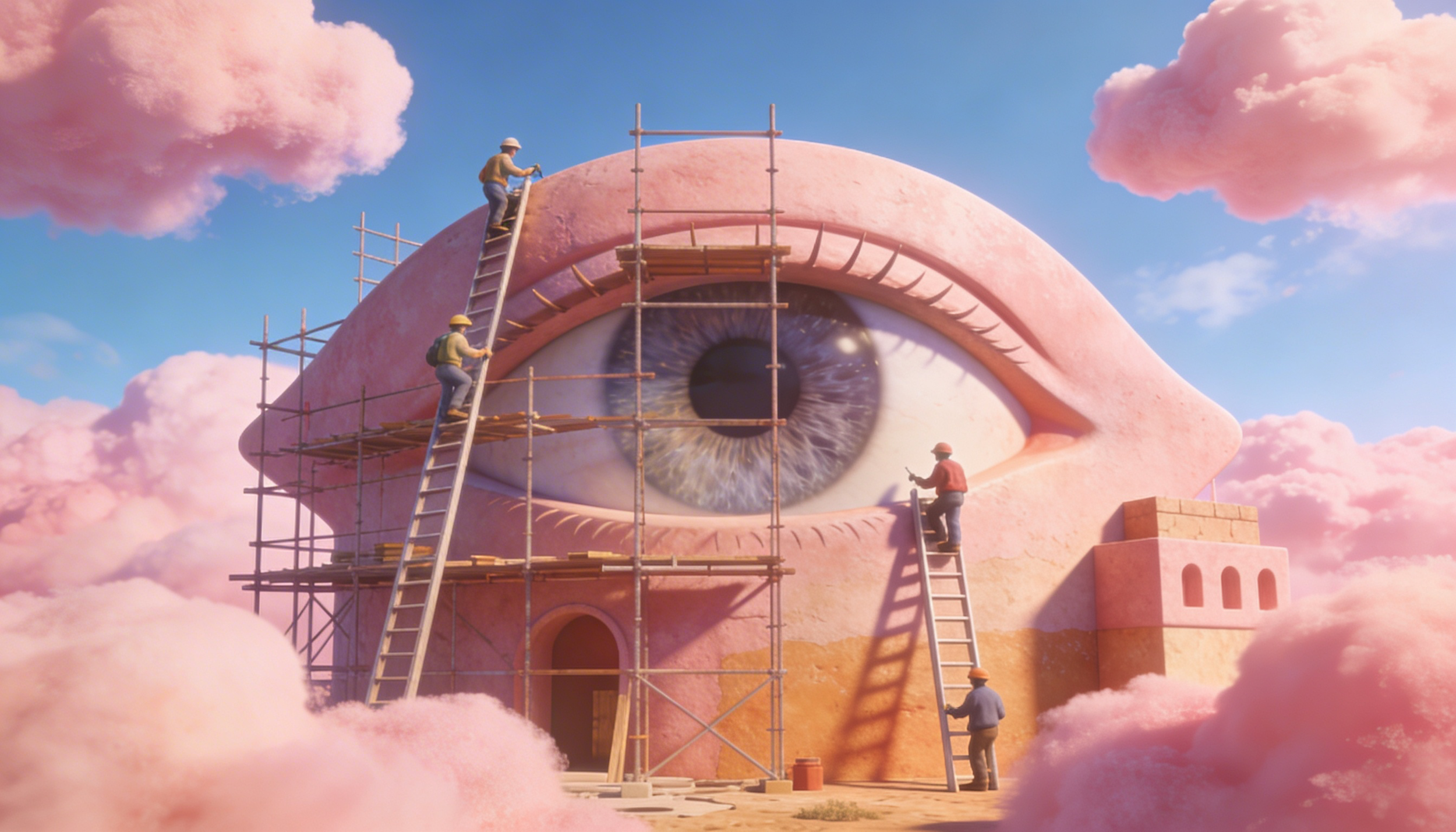
Seedream 4.5: Curt Doty
Something big is indeed happening.
Not in the breathless, LinkedIn-hustle-culture way. Not in the “AI will save everything” pitch deck way. I mean tectonic. Structural. The kind of shift you only recognize in hindsight — like February 2020, when the world felt normal… until it didn’t.
That framing isn’t mine originally. It comes from a piece I recently read — and it hit me square in the chest.
Matt Shumer describes the moment when AI stopped being a helpful assistant and became something closer to a peer. Not a toy. Not autocomplete on steroids. A system that builds, tests, iterates, and delivers finished work without hand-holding. A system that feels like it has judgment.
If even half of that trajectory holds, Matt is partially right.
But only partially.
Because while the ground is shifting fast, and while disruption is absolutely coming, Hollywood — yes, that slow, defensive, legacy machine — is finally turning a corner on AI. And that matters.
Matt Is Right About One Thing: Speed
Let’s start where Matt is strongest: pace.
The people closest to frontier AI aren’t talking about incremental upgrades anymore. They’re describing compounding capability. Coding models that build apps, test them, refine them. Systems that don’t just execute prompts — they interpret intent.
That’s not the same as “AI wrote a cute haiku.”
That’s workflow replacement.
And if you think that won’t eventually touch development, post-production, legal review, marketing, localization, dubbing, previs, and yes — even story development — you’re not paying attention.
We’ve already seen pieces of it.
Synthetic voice restoration in franchise storytelling.
AI-assisted de-aging in tentpole films.
Accent correction controversies that sparked headlines and union anxiety.
AI-native studios produce features at a fraction of traditional cost.
The capability curve is real.
But capability is not the same as cultural adoption.
And that’s where Matt’s thesis misses context.
Hollywood’s Resistance Was Never About Ignorance
Hollywood’s pushback on AI wasn’t technophobia. It was control anxiety.
Studios feared losing leverage. Unions feared displacement. Creators feared theft. Executives feared liability.
And let’s be honest — some of that fear was earned.
Data scraping without consent. Voice cloning without permission. The “Tilly” backlash. The Wild West of generative experimentation.
But what’s happening now is different.
The resistance is thawing.
Not because Hollywood suddenly fell in love with AI — but because acceptance is catching up.
The Inflection Point: From Panic to Policy
The biggest signal isn’t a flashy demo.
It’s institutional language.
Award bodies clarifying that AI tools don’t disqualify creative work — but human authorship must remain central.
Studios forming internal AI governance boards.
Production pipelines testing AI in controlled environments rather than banning it outright.
The shift isn’t loud. It’s procedural.
And that’s how real change happens in Hollywood.
Not through disruption cosplay. Through committee.
Slow. Cautious. Then inevitable.
Creative-Centered AI Is Winning the Argument
For two years, we’ve been pushing the same idea:
AI should amplify creators, not replace them.
That philosophy — Creative-Centered AI — is no longer fringe. It’s becoming the default position.
We’re seeing it in:
Hybrid VFX workflows.
AI-assisted storyboarding.
Ethical synthetic voice partnerships with permission.
Indie creators using AI to prototype without studio gatekeeping.
Studios using AI to accelerate, not eliminate, departments.
Even skeptics are reframing.
Instead of “AI will take jobs,” the smarter leaders are saying: “AI will change jobs.”
That’s a different conversation.
And it’s far more accurate.
The Myth of the Fully Automated Studio
Let’s inject some math into the hysteria.
In the last three years, how many fully AI-generated feature films have meaningfully penetrated theatrical distribution?
A handful.
Out of hundreds of traditional releases.
If AI were already replacing Hollywood, the output would prove it.
It doesn’t.
Because storytelling is not just render speed. It’s development, taste, risk calibration, audience psychology, IP management, and yes — politics.
AI can generate visuals. It cannot yet generate cultural resonance.
The stories still need soul.
Scott Ross said it bluntly in conversation: the tech looks impressive — but the storytelling often falls flat. The emotional architecture isn’t there.
That critique still holds.
For now.
Where Matt’s Warning Gets Real
The real disruption won’t hit Hollywood first.
It will hit the periphery.
Marketing agencies. Localization houses. Entry-level VFX. Junior editors. Concept artists. Development readers. Script coverage analysts.
The bottom of the ladder compresses first.
Then the middle feels pressure.
That’s how technological displacement works.
But here’s the key distinction:
Hollywood isn’t ignoring this anymore.
They’re experimenting quietly.
They’re building task forces. They’re consulting ethicists.
They’re hiring Chief AI Officers. They’re licensing technology instead of scraping it. They’re forming partnerships rather than pretending this will disappear.
That’s not panic.
That’s maturation.
The Studio Model Is Cracking — But Not Collapsing
Joshua Otten makes a compelling case that AI won’t replace artists — it’ll replace studios.
That’s provocative. And directionally interesting.
But studios still control:
Distribution scale. Marketing muscle. IP libraries. Union relationships. Award ecosystems. Global release strategy.
AI lowers the barrier to entry for creators. It does not instantly replace infrastructure.
If anything, we’re moving toward a hybrid era:
AI-powered indie creators who own more IP.
Studios that become distribution and financing partners rather than sole gatekeepers.
Smaller budgets for certain genres.
Premium human-led tentpoles where authorship matters more than ever.
That’s not collapse.
That’s reconfiguration.
The Real Risk Isn’t AI — It’s Complacency
The most dangerous response to AI isn’t fear.
It’s denial.
We’ve seen companies cling to status quo positioning, endless committee debates, and “everything is fine” messaging.
That’s suicide in a compounding technology cycle.
The smart organizations are doing three things:
Identifying workflows that can be enhanced.
Prototyping controlled AI integrations.
Upskilling creative staff instead of replacing them.
The PwC workforce optimism numbers tell us something important: Many workers believe AI will increase productivity and even compensation.
That optimism is not irrational. It’s conditional.
Conditional on leadership investing in people.
Not just cutting headcount and calling it “automation.”
Synthetic Media Is Becoming Legitimate
The term matters.
“Synthetic media” reframes the conversation away from “deepfake panic” and toward a category of tools.
Voice cloning with permission. Digital doubles with consent. Real-time multilingual agents. Interactive video representatives.
The difference between dystopia and innovation is governance.
Companies like Sizzle and Respeecher have built their entire brand on conversational AI and permission-based synthetic voices.
That’s the model.
Consent. Compensation. Transparency.
Hollywood can live with that.
Hollywood cannot live with theft.
So Is This the February 2020 Moment?
Maybe.
But not in the way doomsayers frame it.
We may be in the “this seems overblown” phase.
We may be underestimating the compounding curve.
But here’s the nuance:
Hollywood is not asleep anymore.
The panic phase is fading. The experimentation phase is rising. The governance phase is forming. The hybrid era is beginning.
And that’s why Matt is partially right — but not fully.
Yes, the capability is accelerating. Yes, jobs will shift. Yes, denial is dangerous.
But no — Hollywood is not marching blindly into obsolescence. No — AI has not already replaced the studio system. No — creativity is not dead.
What’s happening instead is more interesting.
The machine is getting better. The humans are getting smarter. And the institutions are adapting — slowly, reluctantly, but undeniably.
That’s a corner being turned.
In the Blink of an EYE
Technological revolutions feel sudden in hindsight.
But in real time? They feel messy. Contradictory. Overhyped. Underestimated.
We’re somewhere between fear and fluency.
Between panic headlines and practical implementation.
Between “AI will destroy Hollywood” and “AI is just another tool.”
The truth, as usual, lives in the middle.
AI is not the auteur. It is not the apocalypse. It is not a toy.
It is infrastructure.
And Hollywood — after years of pearl-clutching and picket signs — is finally learning how to wire it into the system without short-circuiting the soul.
That doesn’t mean the disruption won’t be real.
It means we might just be smart enough to shape it.
And if we are?
Then in the blink of an EYE, this won’t look like resistance anymore.
It’ll look like evolution.